
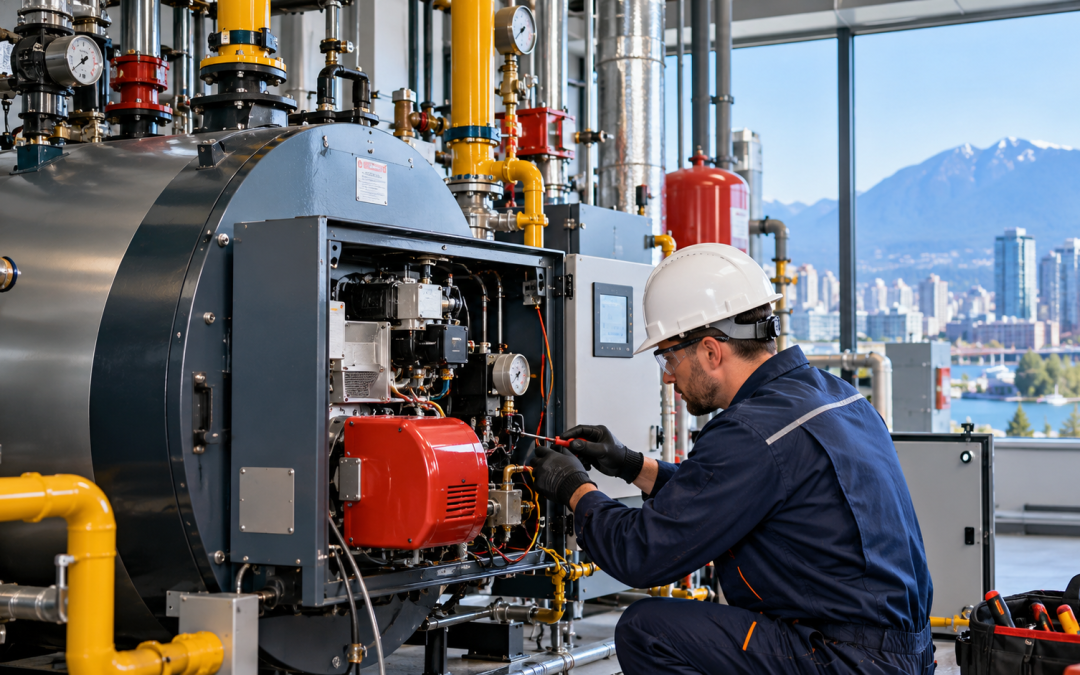
Commercial boilers can fail when buildings need them most, whether during a rainy winter morning when an office needs heating, peak demand at a hotel, or daily operations in an apartment building. These failures can cause more than discomfort. Disrupted heating and hot water can lead to tenant complaints, operational problems, and unexpected maintenance costs.
One of the best ways for businesses and property managers to minimise the risk of a major failure is to identify early warning signs. Commercial boiler repair in Vancouver can help to restore reliable heating, solve mechanical issues and keep the boiler operating safely.
Knowing the common problems, when to contact a boiler service provider, and the safety guidelines set forth in British Columbia, building owners can make informed decisions regarding boiler maintenance.
Why are Commercial Boilers in Vancouver in need of attention?
Vancouver’s wet climate and long heating season place consistent demands on commercial heating equipment. The climate is relatively mild compared to other cities in Canada, but offices, hotels, schools, health care facilities, and multi-unit residential buildings still require dependable heating and hot water.
Suppose there is a condominium with a central heating system that is losing pressure. Residents on upper floors may experience less heating if the cause is not identified, while the building manager is investigating the problem. When a hotel’s boiler breaks down, it can impact the comfort of the guests and the availability of hot water. An unplanned shutdown of an industrial plant could affect a process that needs a continuous supply of steam or heated water.
These are just a few of the reasons why boiler maintenance should be included in a building’s regular operations plan and not just when a boiler breaks down.
7 Warning Signs Your Commercial Boiler Needs Repair

1. The building is not heated evenly
Are there any significant differences in temperature between rooms? This may be caused by circulation pumps, zone valves, trapped air, limited pipework or controls.
In an office building, the thermostats can be adjusted over and over again due to temperature variations without addressing the problem. A technician can identify if the boiler, heating distribution system or control system is at fault.
2. Banging, rumbling or whistling noises
Changes in normal boiler operating sounds can indicate developing equipment issues. Banging or rumbling can be a sign of mineral deposits, poor circulation or localised overheating. Flow restrictions or mechanical issues can be identified by whistling and vibration.
Do not assume that these sounds are harmless just because the system is still producing heat. If the noises are unusual or increase in volume, schedule an inspection.
3. Water leaks and pressure changes
Water around the boiler, frequent loss of pressure, or wet pipe connections should be investigated immediately. The issues can be due to failed seals, leaking valves, expansion vessel issues, or aging pipework.
Frequently refilling the system without determining the cause of pressure loss is not a good solution. Ongoing leaks can cause damage to the mechanical room and other building equipment.
If the water touches electrical equipment or the leak is large, avoid the area and call for professional help right away.
4. Unexpected Increases in Energy Costs
Heating expenses can rise even if the occupancy and hours of operation of a commercial property remain the same. System efficiency can be lowered by dirty heat-transfer surfaces, poor combustion efficiency, control problems and excessive cycling.
But don’t blame the boiler without first examining energy usage, building usage and previous boiler operating history. A service inspection can be useful to determine if the equipment is causing the increase.
5. Frequent Shutdowns and Error Codes
Modern boiler systems have safety controls to monitor operating conditions. Ignition failures, sensor failures, circulation failures, and pressure-related failures can cause the system to shut down.
Record the error code and when the fault occurs. Repeated resets of the boiler may not resolve the problem if the cause is not identified. Never override safety devices to maintain operation of the equipment.
6. Inadequate Hot Water
Commercial buildings have a high demand for hot water at certain times of the day. If a hotel is having trouble supplying sufficient hot water at checkout time or a fitness centre is having trouble supplying hot water for showers, the issue may be heat transfer, circulation, controls or lack of system capacity.
A technician will be able to identify if a component requires repair or if a more in-depth inspection of the system is necessary.
7. Corrosion, Soot or Unusual Odours
Equipment condition, fuel combustion and ventilation issues can be identified by visible corrosion, soot buildup or unusual combustion odours.
If you suspect a gas leak or carbon monoxide problem, treat it as an emergency. When a carbon monoxide alarm sounds or a gas leak is suspected, evacuate the area, follow emergency procedures and call emergency services or the gas company from a safe distance. Never run equipment that is suspected to be unsafe.
The most frequent issues with commercial boilers are listed below.
- Burner and ignition problems: Worn parts, ignition problems and combustion-control problems can cause a boiler to fail to start or run properly.
- Circulation pump failures: When a pump fails, water flow may be limited, resulting in uneven heating or inadequate heat transfer.
- Mineral deposits and corrosion: Mineral deposits can decrease heat-transfer efficiency and corrosion can cause damage to critical components. Depending on the condition of the system, cleaning, repair or equipment replacement may be required.
- Control-system malfunctions: Faulty sensors and incorrect control sequences can cause temperature swings, frequent shutdowns, and wasted energy.
- Leaks, blockages, and failing valves: These issues can cause problems with pressure, water circulation, and heating performance.
The appropriate solution will depend on the equipment, the extent of the fault and the building’s requirements. An accurate diagnosis helps avoid unnecessary component replacements and ensures that the root cause is addressed.
When to Call a Boiler Repair Specialist?
Schedule a service if you are experiencing frequent leaks, irregular heating, strange noises, frequent pressure drops, or unexpected energy bills.
There are some situations that need to be addressed and not just a regular appointment. Follow appropriate emergency procedures if a gas leak is suspected, water discharge cannot be controlled, or another immediate hazard occurs.
Troubleshooting can be facilitated by building operators by recording error codes, documenting previous repairs and noting changes in system performance. Opening equipment enclosures, adjusting gas components or working on pressure systems should be performed by suitably qualified and licensed personnel, however.

Vancouver businesses need to be aware of the following boiler safety requirements:
Commercial boiler maintenance in British Columbia is more than just running the boiler.
Technical Safety BC is responsible for regulated boilers, pressure vessels and associated equipment under provincial legislation, such as the Safety Standards Act and the Power Engineers, Boiler, Pressure Vessel and Refrigeration Safety Regulation.
Depending on the equipment and installation, applicable installation permits, operating permits, or boiler plant operating permits may be required. Requirements depend on the type, capacity, configuration and classification of the plant.
Technical Safety BC also sets licensing requirements for contractors working on regulated equipment. Property managers should make sure that the contractor they hire is licensed for the work they need.
For official guidance, consult these Technical Safety BC resources:
- Boilers and Pressure Vessels: Safety Information and Regulations
- Boilers and Pressure Vessels: Installation Permits
- Boilers and Pressure Vessels: Operating Permits
- Boiler Plant Operating Permits
- Boilers, Pressure Vessels and Refrigeration Contractor Licences
- Power Engineers, Boiler, Pressure Vessel and Refrigeration Safety Regulation
Facility managers can organise maintenance and support compliance by maintaining service records, tracking inspection dates and following manufacturer recommendations.
Commercial Boiler Repair Vancouver – Why Choose CANNEPP?
CANNEPP specializes in commercial and industrial boiler solutions, providing equipment supply, technical services, repairs, preventative maintenance, and system upgrades for a wide range of facilities.
With extensive experience in commercial and industrial boiler systems, CANNEPP supports businesses and facility managers with reliable equipment and technical expertise. Its services include boiler and burner repairs, troubleshooting, testing and diagnostics, annual inspections, commissioning and start-up, boiler plant installations, and control-system upgrades.
Beyond repairs, CANNEPP supplies commercial and industrial boiler equipment and provides ongoing technical support to improve system performance, operational efficiency, and equipment reliability. Its comprehensive boiler services and operations services include scheduled maintenance, system optimization, and pressure vessel repair support.
Whether a facility requires troubleshooting, replacement equipment, preventative maintenance, burner repairs, or modernization of existing boiler systems, CANNEPP offers solutions tailored to the operational requirements of commercial and industrial facilities.
CANNEPP combines equipment supply expertise, experienced technical service, and comprehensive maintenance and upgrade solutions to help businesses maintain safe, efficient, and reliable boiler operations.
How to Reduce the Risk of Boiler Breakdowns in the Future
Preventive maintenance can be used to identify small issues before they turn into big issues. Building managers need not wait for a breakdown in winter, they can schedule servicing according to the manufacturer’s recommendations and operational needs.
Burner and heat exchanger inspections, safety-control testing, circulation checks, water-quality monitoring, and reviews of operating records should all be part of a maintenance plan. Fault codes and energy use should also be monitored to identify changes in performance.
Prior to the heating season, check the boiler’s service record and address any issues. Make sure that necessary inspections and permits are up to date, where applicable, and that staff understand the correct emergency procedures.
Recent Comments