
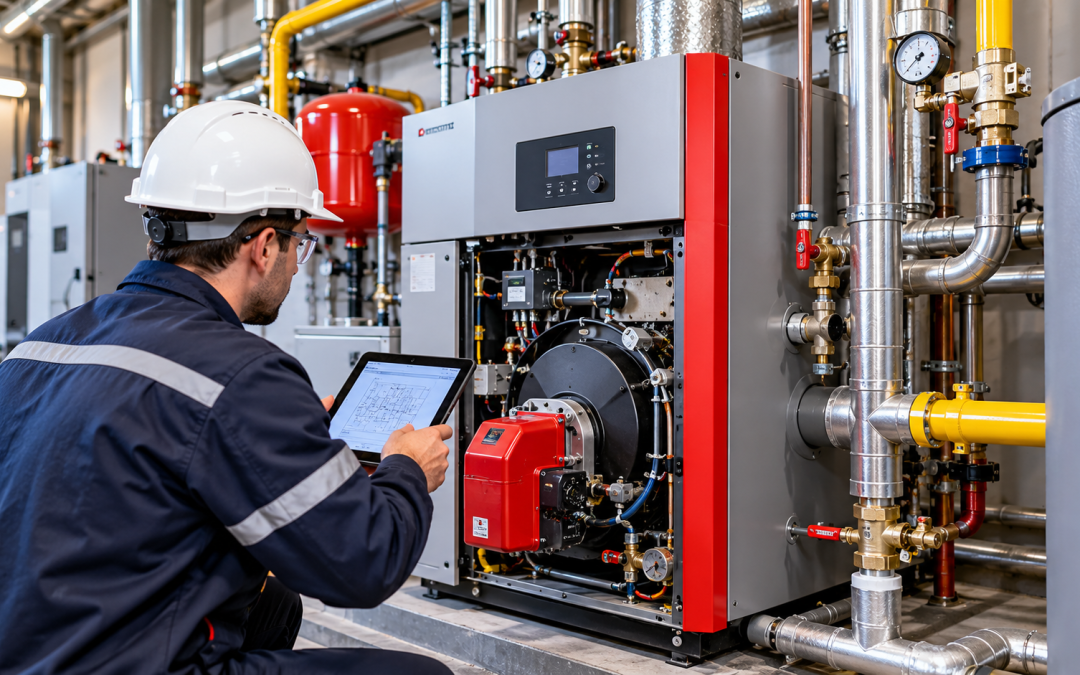
A reliable boiler ensures that the heat is on and hot water flows, whether you are running a strata building, office tower, school or industrial plant in Vancouver. Older heating equipment generally requires increased maintenance, consumes more fuel and is more prone to failure during critical times. It’s a major long-term investment to repair, retrofit or replace your boiler, and it’s worth getting right.
The decision on which to choose will be based on the condition of the boiler, cost of operation, the heating needs of your building, safety and your future energy and emissions goals. If one component fails, it may only require a repair. Older controls may need a particular retrofit. In some instances, the entire boiler replacement is the most cost-effective solution.
This guide will provide you with options to consider when making your decision as a Vancouver building owner or facility manager. CANNEPP offers boiler services, equipment, system upgrades and installations to commercial, institutional and industrial facilities throughout the region.
Why Boiler Upgrades Matter in Vancouver?
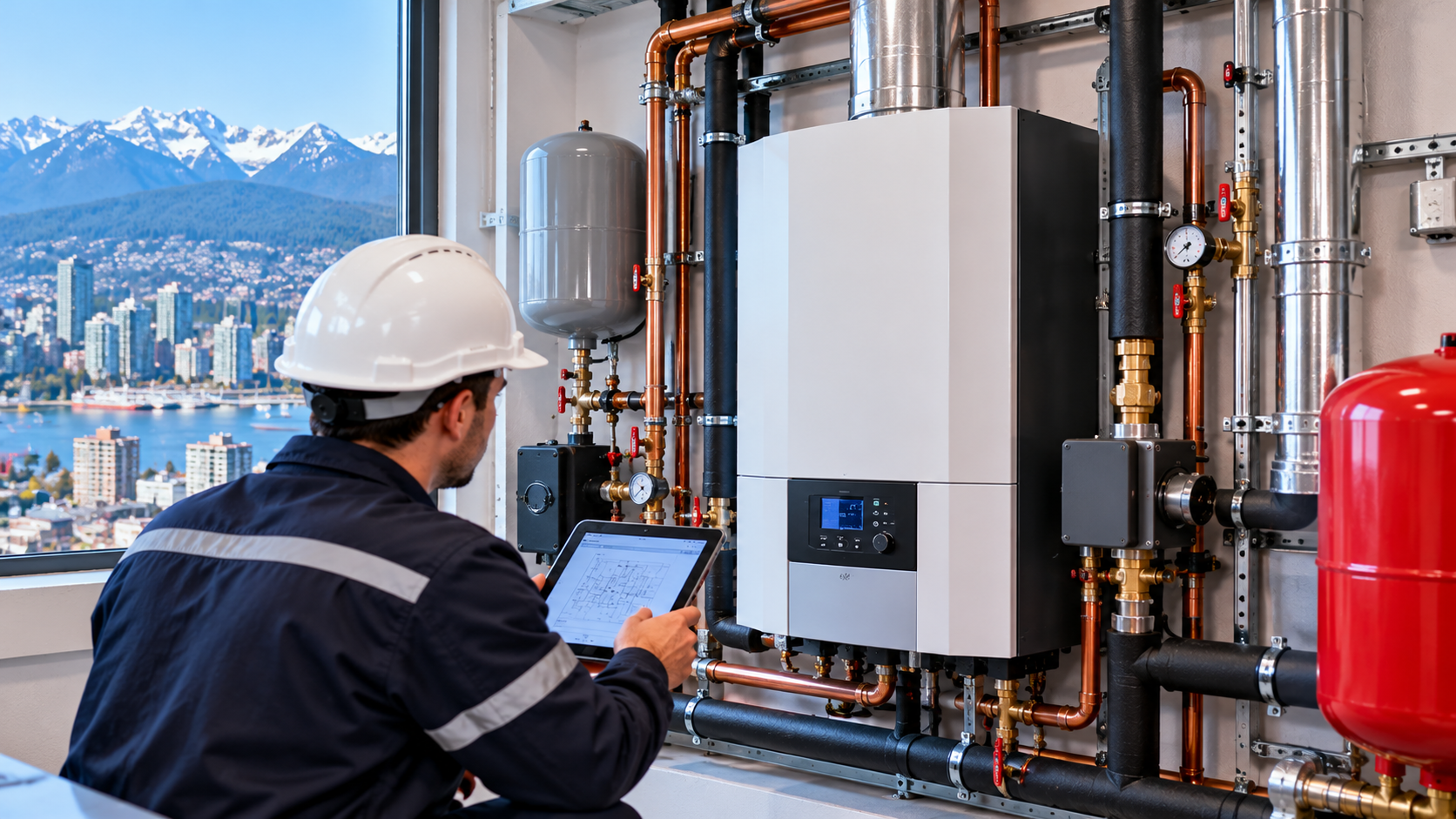
Vancouver’s long, wet winters and variable climate mean that the heating systems are used for a large part of the year. Boilers are used for space heating, process heat and domestic hot water in multi-unit residential buildings, institutional facilities, manufacturing plants and commercial properties in the Lower Mainland.
A boiler can be operating and not operating well. Old controls, poor combustion, worn parts and lack of maintenance all lead to higher fuel usage and less consistent heat. A properly planned boiler upgrade can provide several benefits:
- Enhance heating security and minimize unscheduled outages.
- Manage energy use and costs.
- Improve temperature control and overall system performance.
- Enhance practical efficiency to minimize GHG emissions.
- Comply with safety, operational and regulatory standards, such as Vancouver’s large building emissions limits.
The idea is to select the upgrade that addresses the issue, not to purchase equipment or make changes that your building doesn’t require.
1. When to Repair Your Boiler
If the boiler is structurally sound and the problem is limited to one component, a repair is usually the most practical option. A faulty thermostat or sensor, a leaking valve, a worn pump or an ignition problem can often be fixed without replacing the whole unit.
Signs a Repair May Be All You Need
Arrange a professional inspection if you notice any of the following:
- Uneven heating: Some areas of the building stay cold while the boiler is running.
- Unusual noise or vibration: Banging, whistling or constant vibration can point to circulation problems, scale buildup or mechanical wear.
- Minor leaks: A leaking valve or fitting can usually be repaired, but the source should be found and fixed promptly.
- Control problems: Faulty sensors, thermostats or electrical components can cause the system to behave erratically.
- Repeated lockouts: These may stem from a repairable fault, but the root cause must be properly diagnosed.
A repair makes the most sense when replacement parts are readily available, the system still meets your building’s needs, and the cost is reasonable compared with a retrofit or replacement.
Recurring problems, however, shouldn’t be ignored. If repair bills keep climbing, or if critical pressure-containing components are deteriorating, it is time to assess whether a retrofit or replacement would be more cost-effective.
Safety note: Never ignore a suspected gas leak, a carbon monoxide alarm or signs of unsafe combustion. If needed, evacuate the area and call 911 or your gas utility’s emergency line, then contact a qualified, licensed professional.
2. When a Boiler Retrofit Is the Better Choice
A boiler retrofit replaces or upgrades selected components or functions while keeping the equipment that is still fit for service. For commercial and industrial facilities that need better performance but aren’t ready to replace the entire boiler, a retrofit can be a practical, cost-effective middle ground.
For example, a building may have a boiler that is mechanically sound but relies on outdated combustion controls, making it hard to run efficiently as heating demand changes through the day and the season.
Common Boiler Retrofit Options
Depending on the existing equipment and how it is used, a retrofit may include:
- Advanced combustion controls: Manage the fuel-to-air ratio more precisely during combustion.
- Variable frequency drives (VFDs): Adjust the speed of compatible motors, such as combustion air fans, to match system demand.
- Oxygen trim systems: Monitor oxygen levels in the flue gas and help keep the air-to-fuel ratio optimized.
- Control system upgrades: Replace legacy controls with modern systems that improve monitoring and operating precision.
- Insulation improvements: Reduce heat loss from exposed piping and equipment in the boiler room.
These improvements can help facilities lower emissions, cut unnecessary energy use and run more reliably. Actual results depend on the boiler design, operating conditions, equipment compatibility and the quality of commissioning.
When a Retrofit Makes Sense
Consider a retrofit when the pressure vessel and major mechanical components are in good condition, but the controls, burner or supporting equipment require improvement.
Consider if the building needs to remain operational throughout the works. A staged upgrade can keep disruption to a minimum. Qualified engineering or service personnel should verify that the changes you are considering are compatible with your existing plant before any work is started.
If your facility is experiencing a decline in efficiency or boiler controls that are not up to date, call CANNEPP to discuss your equipment and upgrade options. Boiler retrofit services include controls and system upgrades, factory engineered conversions and steam and hydronic system solutions.
3. When to Replace Your Boiler
Replacement can be the appropriate decision when the existing boiler is nearing the end of its useful life, is in poor condition, or is no longer able to provide the building with the required heating.
Don’t make the decision based on age alone. History of maintenance, inspection results, operating efficiency, parts availability and the impact of an unexpected failure all play a role.
Signs It May Be Time to Replace Your Boiler
- Recurring breakdowns: Maintenance costs and downtime are increasing due to frequent breakdowns.
- Major component deterioration: If the pressure vessel, heat exchanger or other major components are seriously damaged, it may be impractical to continue operation.
- Poor efficiency: Fuel consumption stays high even after proper maintenance and repairs.
- Inadequate capacity: When a building is added or the use of a building changes, the boiler may not be able to keep up.
- Obsolete equipment: Replacement parts or qualified service technicians are hard to find.
- New energy targets: You want to change your heating technology or decrease your natural gas use.
All replacement projects should begin with verifying the actual heating load of the building. If the boiler is too large, it will short cycle and operate inefficiently at partial load, and if it is too small, it will not keep up during cold snaps. The type of equipment should be chosen to suit the load profile of the building, the water or steam conditions and any future plans for the property.
For larger plants, a boiler replacement may also involve changes to piping, venting, electrical systems and controls. Plan for these costs from the beginning of the project.
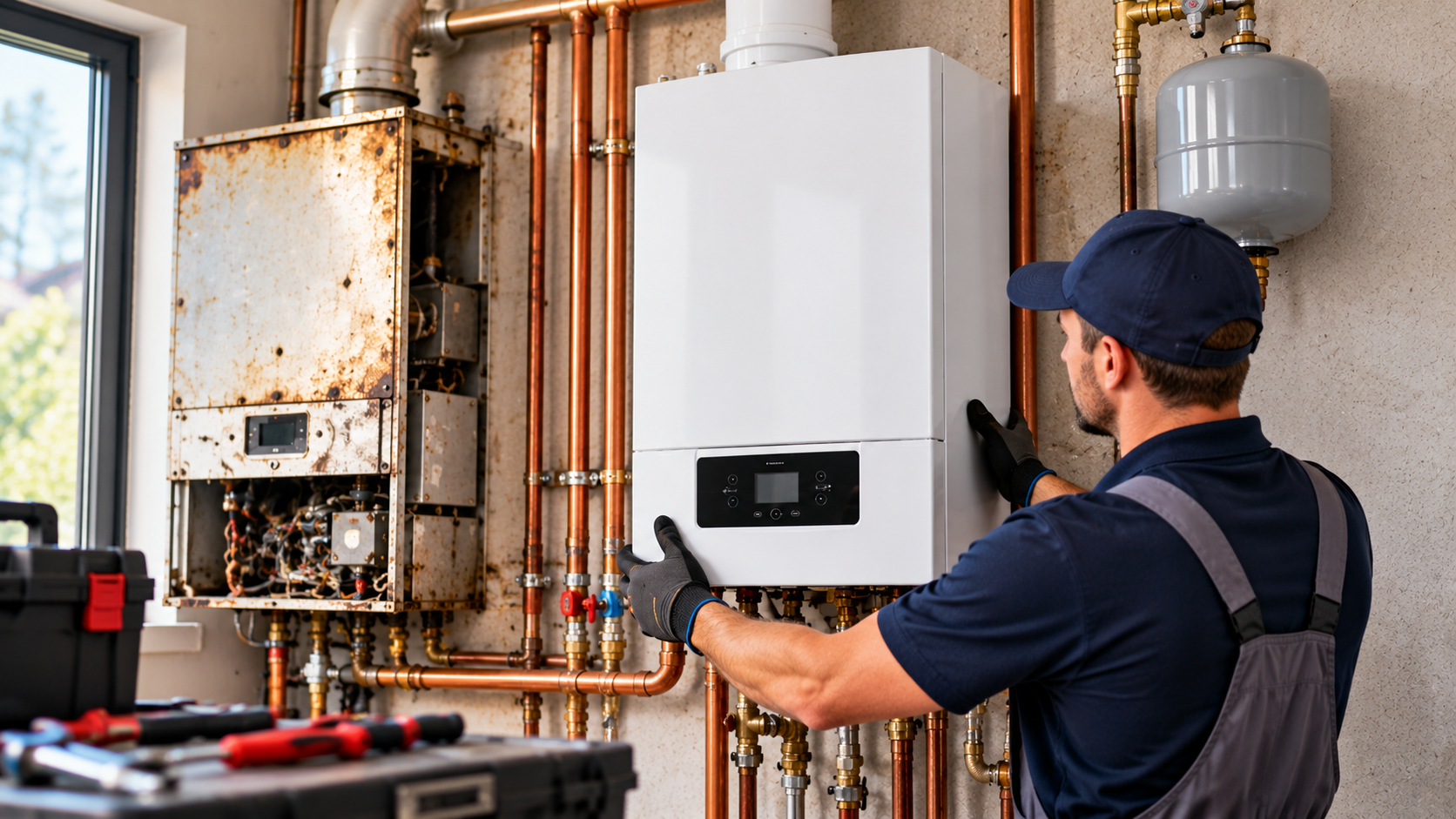
4. Repair vs Retrofit vs Replacement: Side-by-Side Comparison
The lowest initial quote isn’t always the best value. Prior to making a decision to undertake a project, request a condition assessment, a detailed cost estimate, the performance improvements and ongoing maintenance recommendations. Commercial building owners should also consider the cost of downtime and the system’s operating costs throughout its service life.
5. Vancouver Regulations, Permits and Energy Incentives
The timing and extent of a boiler upgrade may be influenced by local regulations and incentives. Before beginning work, verify the requirements applicable to your building, equipment and work.
Technical Safety BC Permits
Technical Safety BC regulates boiler installations in BC. A licensed contractor or the equipment owner can apply for an installation permit for a regulated boiler. In addition, many boilers require a Canadian Registration Number (CRN) for their design prior to the issuance of a permit. Your contractor should arrange for the necessary permits and inspections to be made as part of the project.
Vancouver’s Annual GHG and Energy Limits By-law
The City of Vancouver has established energy reporting and greenhouse gas intensity requirements for certain large commercial and multi-unit residential buildings. However, enforcement of the Annual Greenhouse Gas and Energy Limits By-law was paused in May 2026 pending further review. Building owners considering boiler upgrades should consult the City’s Energize Vancouver program for the latest requirements and consider their long-term energy efficiency and emissions objectives when evaluating equipment options.
Energy Assessments and Incentive Programs
Commercial and industrial building owners may also be able to take advantage of energy assessments and efficiency programs:
- FortisBC Commercial Energy Assessment Program: A walk-through assessment for eligible businesses to identify energy-efficiency improvements and available rebates.
- BC Hydro Integrated Energy Audit: Assists eligible industrial and large commercial customers to audit their energy consumption, energy efficiency opportunities and potential electrification projects.
Eligibility and program terms and funding may vary. Before relying on incentives in your project budget, verify the information with each provider.
Why a Professional Boiler Assessment Matters?
Commercial and industrial boiler systems involve complex combustion processes, pressure management, water or steam circulation, and safety controls. Upgrading or repairing these systems requires technical expertise, equipment compatibility assessments, and proper commissioning to ensure safe and efficient operation.
CANNEPP specializes in commercial and industrial boiler equipment supply, technical service, burner repairs, burner and controls upgrades, system retrofits, and complete boiler plant solutions. From equipment selection and installation to maintenance and system modernization, CANNEPP provides comprehensive support tailored to each facility’s operational needs.
Contact CANNEPP to discuss reliable, efficient, and cost-effective solutions for your commercial or industrial boiler system.
Frequently Asked Questions
1. How long does a commercial boiler last?
Service life varies widely with boiler type, water treatment, operating hours and maintenance. A well-maintained boiler can often run for decades, while a neglected one may fail much sooner. A condition assessment is a more reliable guide than age alone.
2. Do I need a permit to replace a boiler in Vancouver?
In most cases, yes. Regulated boilers require an installation permit from Technical Safety BC, and gas or electrical work may need separate permits. A licensed contractor will know which permits apply to your project.
3. Is a retrofit cheaper than a replacement?
A retrofit usually costs less upfront because it reuses equipment that is still in good condition. However, if the pressure vessel or other major components are deteriorating, a replacement may offer better long-term value.
4. Does Vancouver’s emissions by-law affect my boiler?
Vancouver has energy reporting and emissions requirements for certain large buildings. However, enforcement of the Annual Greenhouse Gas and Energy Limits By-law was paused in May 2026. Building owners should check the City’s Energize Vancouver program for updates and consider energy efficiency when planning boiler upgrades.
Recent Comments